Pawtuxet Falls Dam Removal
Project Summary
In the 19th century, dams constructed along the Pawtuxet River helped to power Rhode Island’s textile industry. Years of industrial use, including the release of untreated chemicals from the Ciba-Geigy chemical plant, left the river heavily polluted. Poor water quality led to declines in fish population and river access for the local community. After decades of investments aimed at improving water quality and habitat in the river, the decision was made to remove the Pawtuxet Falls Dam. For hundreds of years, the Pawtuxet Falls Dam blocked migratory fish passage as the first of many dams leading from the Narragansett Bay through the mill towns situated along the river.
Challenges
There were multiple hurdles that needed to be overcome before the dam could be removed. Design issues were complicated as stakeholders wished to minimize changes to the river’s morphology. However, bedrock in the area was not stable enough to safely navigate river herring upstream and allow for a full dam removal. The water quality and sediment were degraded by more than a century’s worth of upstream discharge of human and industrial waste, including the hazardous waste. Furthermore, at the time, it would have been the largest ecological dam removal undertaken in Rhode Island. Lastly, Pawtuxet Falls Dam was in a highly visible historic location and the dam and waterfall were part of the local landscape and sense of place.
Solutions
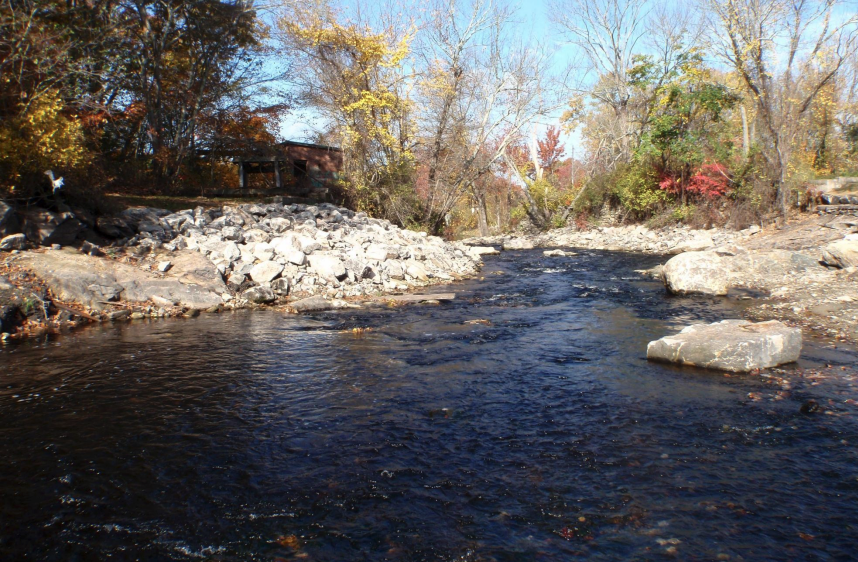
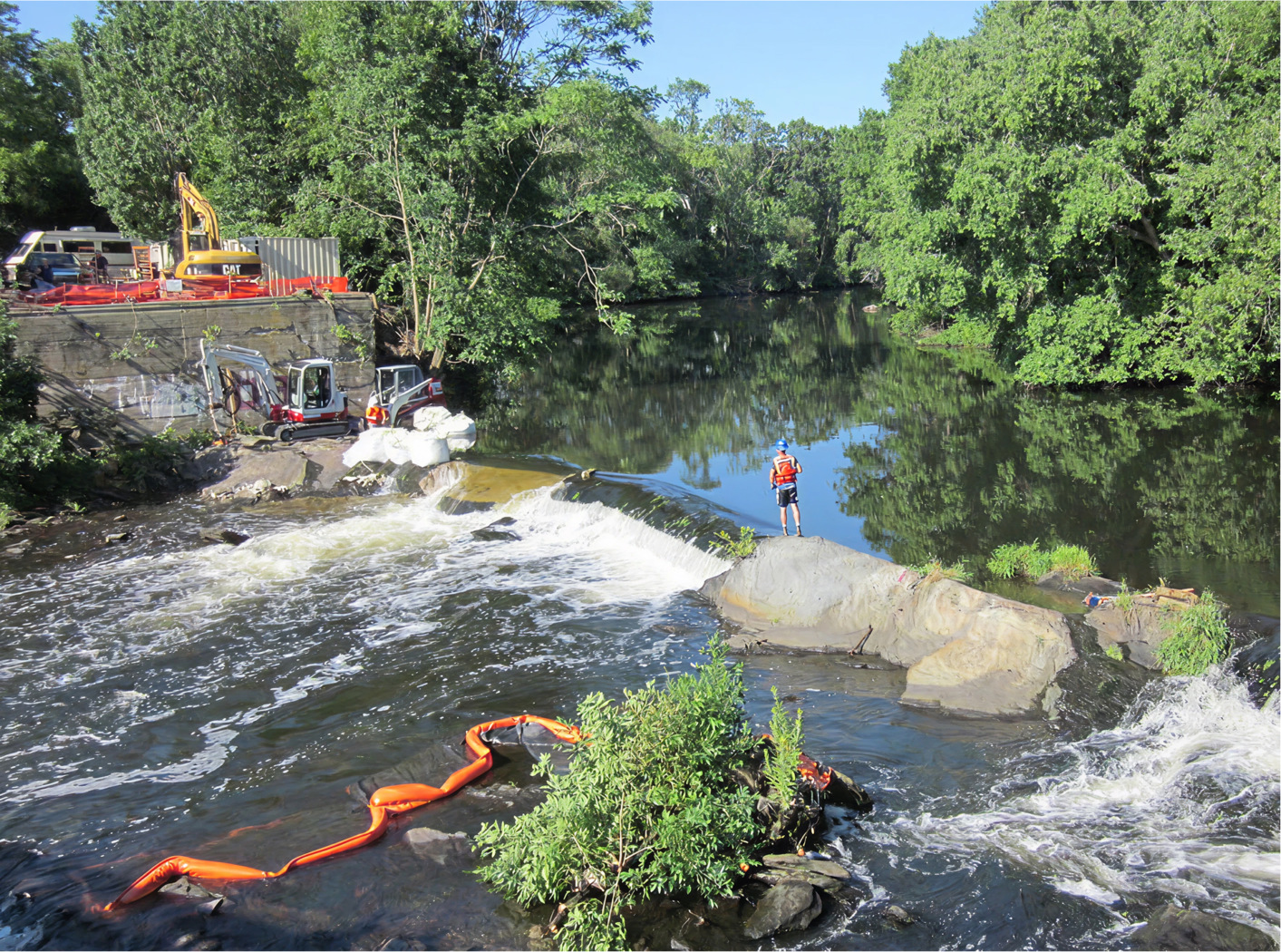
In 2011, a project led by the Pawtuxet River Authority and Narragansett Bay Estuary Program, along with dozens of partners, used excavators to strategically demolish the concrete spillway. Native wetland plantings were installed along the newly exposed river banks to aid habitat restoration goals. Today, anadromous fish populations like river herring and American shad are once again able to travel upstream to spawn. This project employed a process of ongoing public interaction, including advocacy on the part of a local business owner. Eight public meetings were held over four years, during which time, assessments and design plans were completed. During this process, the design was modified due to the bedrock conditions. The final design resulted in a portion of the dam staying in place to divert flow and fish in a way that promotes successful upstream migration.
Successes
A NOAA representative reflecting on the process asserted that the biggest hurdle was consensus-building. Ultimately, community consensus was reached, and for the first time in three hundred years, this section of the river was able to flow freely into Narragansett Bay, restoring 7.5 miles of spawning habitat above the dam.
Lessons Learned
For highly visible dams, the public process is very important to build an understanding of the project trade offs and the varying community interests.
References and Additional Resources
- NBEP presentation: https://scholarworks.umass.edu/cgi/viewcontent.cgi?article=1212&context=fishpassage_conference
- Cranston Herald Article: https://cranstononline.com/stories/village-celebrates-dam-removal-opening-pawtuxet-to-migratory-fish,63352